


Laminate and luxury vinyl plank (LVP) get lumped together constantly, and it's easy to see why. Both click together, both mimic real wood, and both cost less than hardwood. But the materials underneath are completely different, and that difference decides which rooms each one can handle.
Get the match right and your floor lasts for years. Get it wrong, especially in a humid Kentucky basement or a busy kitchen, and you'll be replacing planks far sooner than you should.
The Core Difference That Drives Everything
Laminate is built on a high-density fiberboard (HDF) core, which is essentially compressed wood. That wood core is what gives laminate its hard, realistic feel underfoot, but it's also why standing water is its enemy. If moisture works into the seams and reaches the core, the planks can swell and won't recover.
Luxury vinyl plank uses a plastic-based core, usually SPC (stone-plastic composite) or WPC (wood-plastic composite). Because there's no wood to absorb water, quality LVP is fully waterproof, not just water-resistant. That single trait is what makes vinyl the safer pick for the wettest rooms in the house.
Where Vinyl Wins
Put LVP anywhere water shows up. Bathrooms, laundry rooms, mudrooms, kitchens and especially basements are all natural fits, because spills, splashes and humidity won't damage the waterproof core. In a Kentucky basement, where concrete slabs wick moisture and summer humidity runs high, vinyl is almost always the right call.
When you shop vinyl, check the wear layer, measured in mils. A 12-mil wear layer suits a normal household, while 20 mils or more stands up to heavy traffic, pets and rolling chairs. Thicker isn't always necessary, but for high-use rooms it's worth the upgrade.
Where Laminate Shines
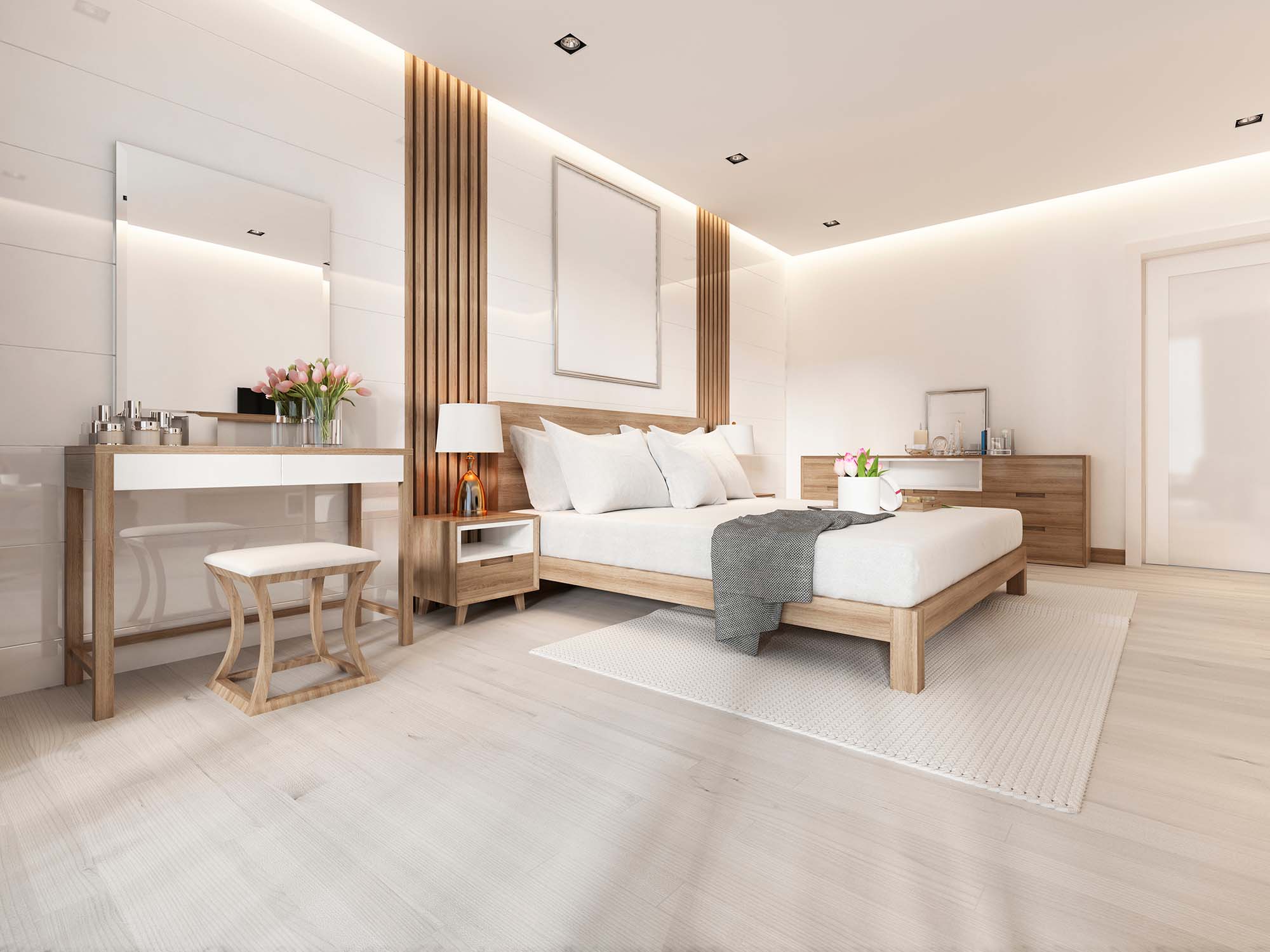
Laminate belongs in the dry, high-traffic living spaces. Bedrooms, living rooms, dining rooms, hallways and home offices are ideal, because they stay dry and laminate's harder surface resists scratches and dents beautifully. Today's laminate also comes in wider, longer planks with improved moisture protection, so it looks more like real hardwood than ever.
Look at the AC rating when comparing laminate. AC3 handles typical residential use, AC4 stands up to heavier foot traffic, and AC5 is built for the toughest spaces. Matching the rating to the room keeps the surface looking new for the long haul.
A Simple Room-by-Room Cheat Sheet
Bathrooms, laundry, mudrooms: waterproof LVP, no exceptions.
Kitchens: LVP for spill protection and easy cleanup.
Basements: SPC vinyl, ideally with a rigid core that handles slab moisture.
Bedrooms, living and dining rooms: laminate, AC3 or higher.
Hallways and offices: laminate with a higher AC rating for traffic.
Every house is a little different, and subfloor condition, moisture readings and traffic patterns all factor into the right choice. At Pontrich Floor & Paint, we'll walk through your home room by room and recommend the exact product, core and wear layer for each space, so you're never guessing.
We're proud to serve @@service-areas@@ with honest advice and quality installation. Visit @@all-showrooms@@ to compare laminate and vinyl in person, or contact us today for a free in-home consultation and estimate.


