


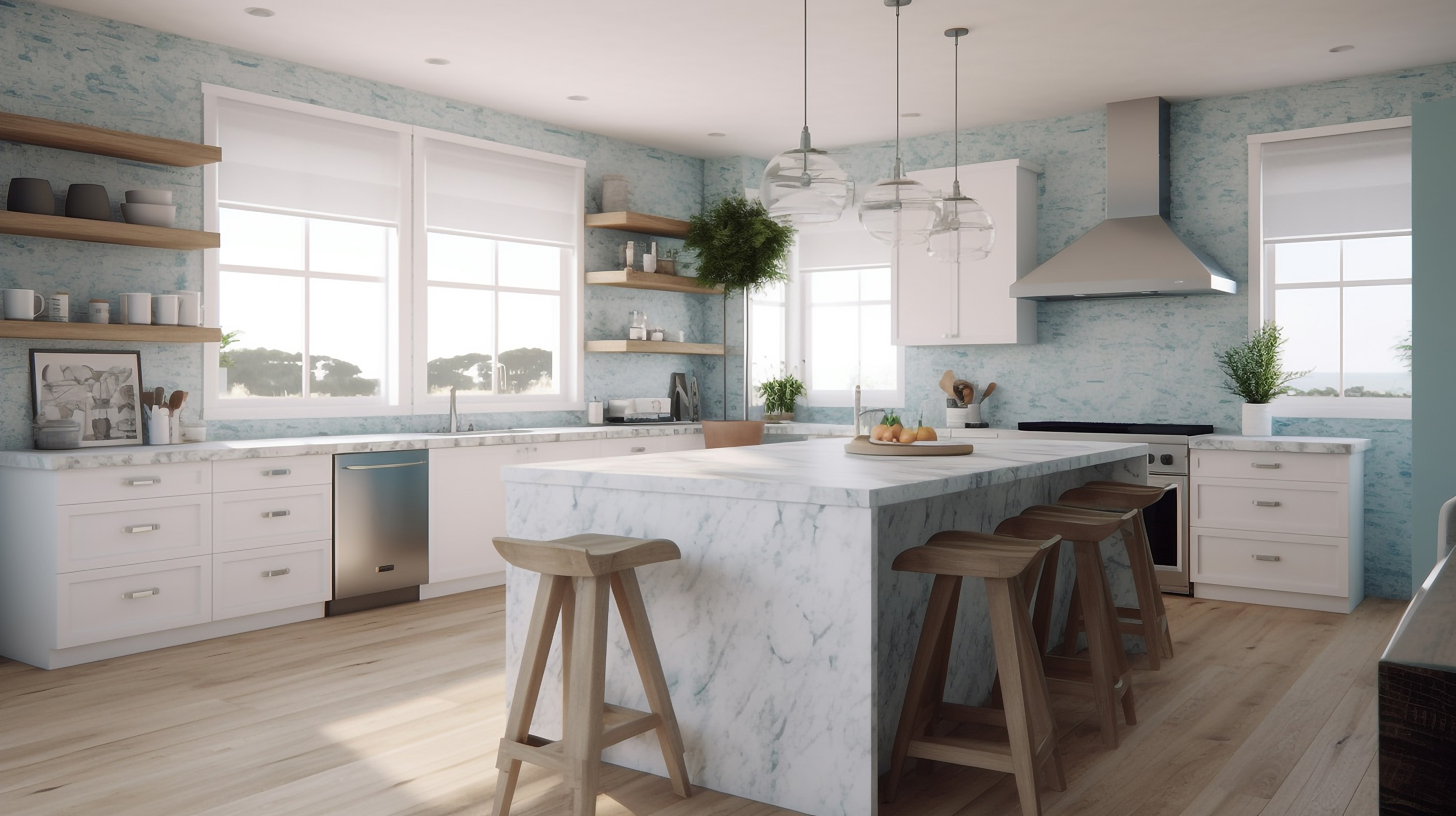
Your kitchen floor does more than resist wear. It affects comfort underfoot, noise, cleaning time, and how forgiving the room feels during daily life.
For many homes, the best kitchen floor is not the hardest surface available. It is the one that best balances durability, maintenance, moisture resistance, and comfort.
When people shop for kitchen flooring, they often start with one question: what is the toughest option? That sounds logical, but it is incomplete. Hardness is only one performance trait. In a real kitchen, comfort, water behavior, sound, joint stress, and repairability matter just as much.
At Pontrich Floor & Paint, we help homeowners across @@service-areas@@ compare flooring based on how the room actually functions, not just on showroom buzzwords. In many kitchens, vinyl flooring or laminate flooring can outperform harder surfaces simply because they are better matched to the way people live.
Hardness is not the same as kitchen performance
A very hard floor resists dents well, but that does not automatically make it the best kitchen floor. Kitchens create a specific type of wear pattern:
repeated standing in one place
dropped utensils and cookware
frequent chair movement
spills around the sink, dishwasher, and refrigerator
crumbs, grease, and gritty debris near entries
A floor that is too rigid can feel fatiguing during long prep sessions. It can also be louder, less forgiving to dropped items, and less comfortable in homes where the kitchen blends into the main living area.
This is why performance should be evaluated across several technical categories:
What actually matters in a kitchen floor
Moisture resistance
This is the first filter. Kitchens are not full-time wet rooms, but they are high-risk splash zones. Around the sink, dishwasher, ice maker line, and pet water bowls, moisture management matters.
Vinyl flooring has a strong advantage here. Many vinyl products, especially rigid core and luxury vinyl plank, handle routine spills better than laminate because the material itself is more moisture-resistant. Laminate can still work in kitchens, but product selection and seam protection matter more.
Underfoot comfort
A kitchen is a standing room. You chop, rinse, prep, unload, wipe down, and repeat. Floors that are technically durable but physically tiring can become annoying fast. Vinyl typically has more give underfoot than harder, more rigid surfaces. That softness can make a noticeable difference for people who cook often.
Sound
Open-concept layouts changed the kitchen flooring conversation. The floor no longer performs in isolation. If the kitchen connects directly to a family room, breakfast area, or hallway, impact sound matters. A floor that clicks, echoes, or amplifies chair movement can make the whole first floor feel harsher than it looks.
Subfloor forgiveness
No subfloor is perfectly flat in an older home. Some kitchen floors handle slight imperfection better than others, but none should be installed over a truly uneven base. Vinyl and laminate both require proper flatness, yet rigid products react differently to dips and humps. Choosing the wrong product for the subfloor condition can lead to movement, edge stress, or noise.
When vinyl is the smarter kitchen choice
Vinyl flooring is often the practical winner in kitchens because it addresses the actual pain points homeowners mention most:
easier spill management
softer feel underfoot
quieter walk surface
better compatibility with busy family use
wood-look visuals without the upkeep concerns of more finicky materials
Not all vinyl is equal, though. You need to compare wear layer, locking system, core construction, and plank stability. A thin, low-grade product may look good for a year and then telegraph subfloor issues or show seam weakness.
For kitchens, product quality matters more than marketing words like premium or waterproof.
When laminate still deserves a serious look
Laminate is still a valid kitchen contender when the homeowner prioritizes scratch resistance, crisp visual realism, and overall value. It can be a strong option in kitchens with:
disciplined cleanup habits
lower splash risk
a well-prepped, flat subfloor
careful perimeter detailing
a quality underlayment system where appropriate
Modern laminate has improved significantly, but kitchen success depends on installation discipline. Expansion space, transition planning, and perimeter sealing strategy matter. If those details are sloppy, the floor may fail long before the surface layer does.
The real hot take
The best kitchen floor is not the one with the most extreme spec in one category. It is the one with the best balance for the room.
For many homeowners, that means choosing a floor that feels better at hour two of cooking, sounds better in an open-concept plan, and handles normal spills without drama. In that equation, “hardest” often loses to “best matched.”
That is why the kitchen flooring decision should be based on lifestyle first, then construction details, then color and style.
Questions to ask before you choose
Before you commit, ask:
How often do people stand and cook here?
Is this kitchen part of an open floor plan?
Are there kids, pets, or heavy traffic patterns?
Is the subfloor flat enough for the product being considered?
Do you need the floor to handle routine spills or occasional appliance leaks?
Are you more sensitive to scratches, noise, or joint fatigue?
Those answers will usually narrow the field quickly.
If you are choosing between vinyl and laminate for your kitchen, the smartest move is to compare products in person and talk through how the room is actually used. At Pontrich Floor & Paint, we help homeowners sort through performance details, visuals, and installation requirements without the guesswork.
Visit us at @@all-showrooms@@ to explore kitchen-ready flooring options for homes across @@service-areas@@. When you are ready to narrow down the right fit for your space, contact us to speak with our team or schedule your next flooring consultation.


