


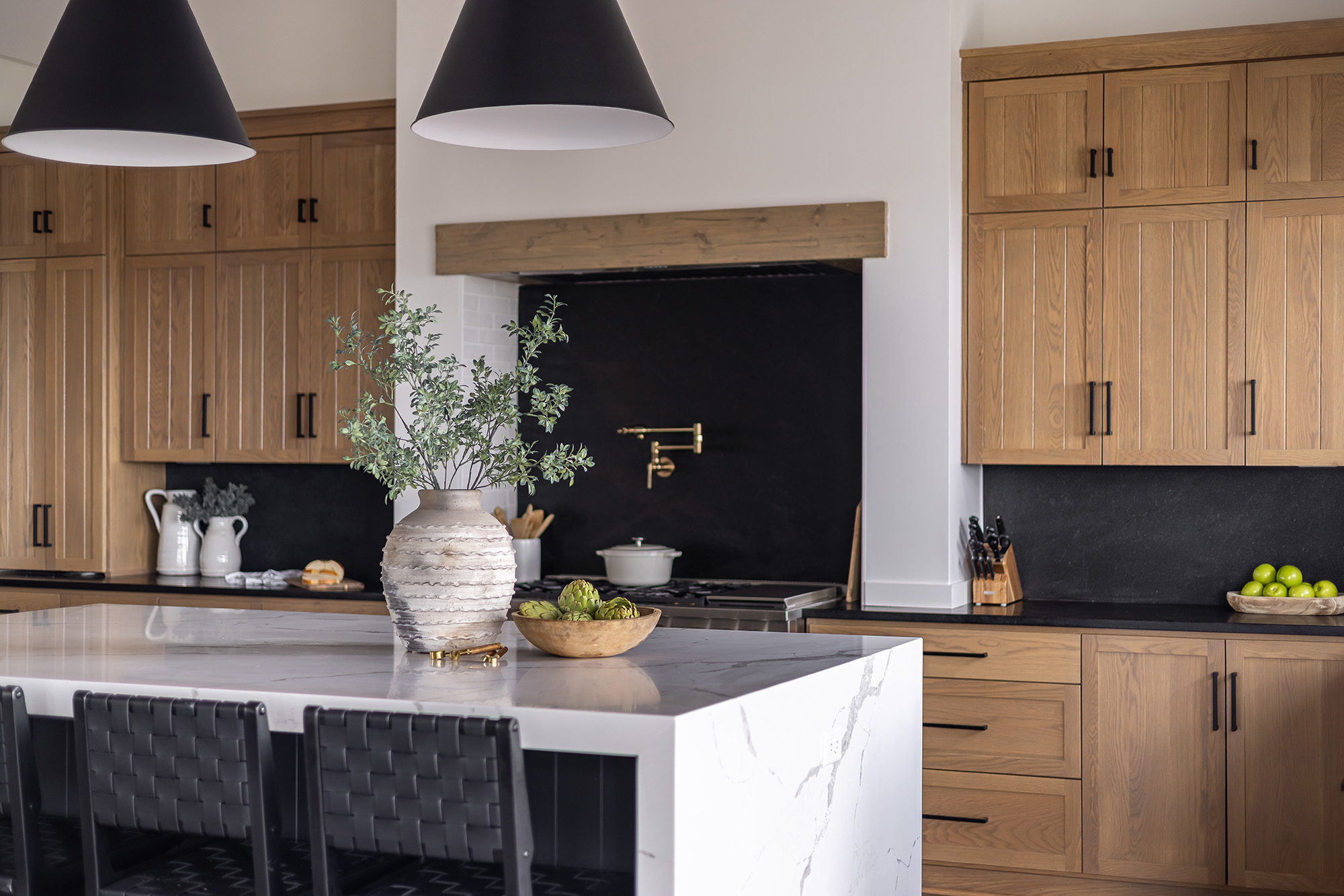
Oak cabinets are not all the same color, even when they are described the same way. Some are golden, some lean orange, some have a pink-beige cast, and older cabinets may have darkened from years of sunlight, cooking, and finish aging. Before choosing vinyl or laminate flooring, homeowners should look at the cabinet color in daylight and evening light, because the undertone can shift more than expected.
The safest approach is to treat the cabinets as the fixed design element. If they are warm honey oak, the floor should either gently coordinate with that warmth or create a clean contrast. What usually looks wrong is a floor that is almost the same color but not quite. That near-match effect can make both the cabinets and the floor look accidental.
Avoid the Almost-Matching Floor Problem
A common mistake is choosing a vinyl plank or laminate floor that copies the cabinet color too closely. If the cabinets are golden oak and the floor is another golden wood look, the room can feel heavy, flat, and dated. The eye has nowhere to rest because the vertical and horizontal wood tones blend into one large orange-brown surface.
A better option is contrast with intention. For warm oak cabinets, look at natural brown, soft greige, light neutral oak, or muted beige-brown flooring. These tones can make the cabinets feel calmer without forcing a full kitchen remodel. For darker oak cabinets, a lighter vinyl or laminate floor can brighten the room and make the cabinet color feel more deliberate.
Check Undertones Before You Check Style
Flooring should be judged by undertone before pattern. A beautiful plank can still look wrong if its base color clashes with the cabinets. Yellow oak usually works best with warm-neutral flooring, not cool gray. Orange oak often needs a softer neutral floor to reduce the warmth. Red-toned oak should be tested carefully against floors with pink, taupe, or brown undertones.
This is where in-room samples matter. A showroom sample under bright lights will not behave the same way in a Shelbyville kitchen with shaded windows, warm bulbs, or dark countertops. Place samples against the cabinet toe kick, near the island, and beside any existing trim. Look at them in the morning, afternoon, and at night before making the final call.
Use Grain Pattern to Control Visual Noise
Oak cabinets already have visible grain, especially if they are traditional raised-panel doors. Pairing them with a high-variation floor can make the room look busier than intended. In kitchens with detailed cabinetry, laminate or vinyl with a smoother grain, lower color variation, and fewer dramatic knots will usually feel more updated.
That does not mean the floor has to be plain. A subtle wire-brushed look, soft oak visual, or low-contrast plank can still add texture without competing with the cabinets. If the cabinets are simple and flat-front, homeowners have more room to use stronger grain movement. The key is balance, not matching every wood feature in the room.
Think About Countertops, Trim, and Wall Color Too
Cabinets are important, but they are not the only fixed surface. Countertops, backsplash, wall color, and trim can change how a floor reads. A warm oak cabinet with a cool white countertop may need a floor that bridges both tones. A beige countertop may look better with a natural brown floor than a gray one.
Trim also matters. If the baseboards are white, the floor has more freedom to contrast. If the trim is stained wood, the flooring needs to be tested against both the cabinets and the trim. Too many unrelated wood tones can make a room feel pieced together, especially in open layouts where the kitchen connects to living or dining areas.
Choose the Right Product for the Room
For kitchens, dining areas, mudrooms, and busy family spaces, luxury vinyl plank is often considered because it handles surface moisture well and offers wood-look visuals with practical maintenance. Laminate can be a strong option for homeowners who want a rigid feel and realistic wood texture, but the product’s moisture rating and installation details should match the room.
Thickness, locking system, attached pad, wear layer, and subfloor flatness all affect the finished result. A good color choice can still disappoint if the floor clicks, gaps, flexes, or feels hollow. For cabinets that are staying in place, measurements and expansion space around fixed structures need to be handled carefully during installation.
Matching new flooring with existing oak cabinets is less about finding the exact same wood tone and more about choosing the right relationship between warmth, contrast, grain, and lighting. The best vinyl or laminate floor should make the cabinets feel intentional, not leftover from another design era.
Homeowners can visit @@all-showrooms@@ to compare vinyl, luxury vinyl, laminate, and waterproof flooring options in person with Pontrich Floor & Paint. For help choosing floors for homes in @@service-areas@@, contact us to schedule a flooring consultation or request an estimate.


