


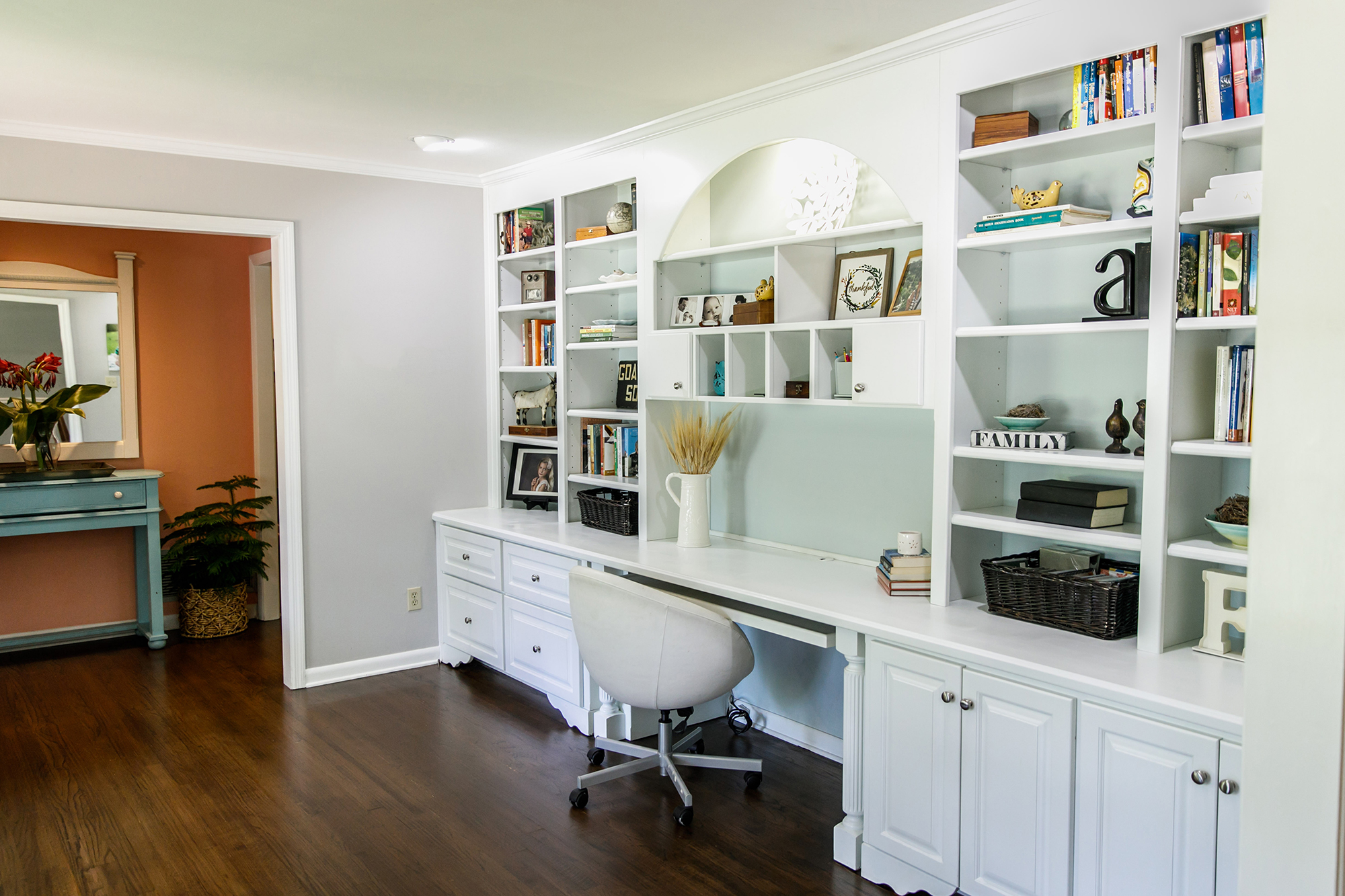
Why a Home Office Needs Different Flooring Than a Guest Room
A guest room might see foot traffic a few nights a month, but a home office sees eight or more hours a day of chair rolling, foot tapping, and constant weight shifting in the same small footprint. That concentrated wear pattern is very different from general household traffic, and it changes which flooring specs actually matter.
Wear layer thickness becomes important here in a way it would not for a rarely used room. A vinyl plank with a 20 mil wear layer will resist the scuffing and dulling that a chair's casters create far longer than a budget 6 to 8 mil product, even if both floors look identical in the showroom.
Chair Casters and Rolling Damage
Standard office chair casters are hard plastic, and hard plastic rolling repeatedly across a soft or thin surface will burnish and eventually scratch through a finish faster than normal walking traffic ever would. This is one of the most common callbacks flooring retailers see from home office conversions.
The fix is straightforward. Choose a rigid core vinyl plank with a thicker wear layer, or add a chair mat rated for hard floors under the desk area. Laminate can work in a home office too, but its harder, more brittle wear surface is somewhat more prone to caster scratching than a quality vinyl product, so a mat is worth the extra step either way.
Sound and Video Call Considerations
Hybrid work means video calls, and flooring affects the acoustics of a room more than most people expect. Hard surfaces without any cushioning can create echo and make a home office sound less professional on a call, especially in a room with high ceilings or minimal furniture.
Vinyl plank with an attached cork or foam underlayment absorbs some of that reflected sound compared to a laminate installed directly over a thin foam pad. If the office is in a finished basement, this attached underlayment also helps dampen the hollow, echoey sound that basement floors are known for.
Basement Offices and Moisture
A growing number of home office additions in the Louisville and Shelbyville area are happening in finished basements, since that space is often available without a full home addition. Basements bring moisture considerations that an upstairs bonus room does not.
Waterproof rigid core vinyl plank is the more reliable choice below grade, since it will not swell or delaminate if humidity levels rise during a wet Kentucky spring. Laminate can be installed in a basement, but only with a proper vapor barrier and a laminate line specifically rated for below grade use, which narrows the options considerably.
Matching the Floor to How the Room Will Actually Be Used
Every home office is a little different depending on furniture layout, whether it doubles as a guest room, and how many hours a day it is actually in use. A room used for occasional calls has different flooring priorities than one that functions as a full time workspace.
Talking through the specific setup with a flooring professional before ordering material helps avoid choosing a beautiful floor that was not built for the way the room will actually be lived in day to day.
Visit Pontrich Floor & Paint in Shelbyville
Pontrich Floor & Paint works from our showroom at @@all-showrooms@@, serving homeowners across @@service-areas@@ who are building out home offices, bonus rooms, and finished basements. Our team can recommend the right wear layer, core type, and underlayment for how your workspace will actually be used.
Explore our vinyl flooring and laminate flooring options, then contact us to get a recommendation built around your home office plans.


